
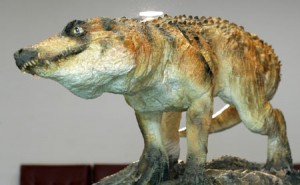
The region is also a survey center on the Brazilian Prehistoric era. In the municipality of Sousa, 427 km away from the capital, in the hinterland of the state, lies the famous Dinosaurs Valley, where researchers have found the footprints of Prehistoric animals, dating back 130 million years. The area is regarded as one of the most important archeological sites in the world - the Peixe River basin displays the highest incidence of dinosaur footprints in the world.
In Ingá, located on the Borborema Plateau, there are cave inscriptions engraved on stone, still an enigma to experts (some attribute the signs to the ‘1isit of Phoenicians to Brazil). The local Museum of Natural History holds lots of information on the animals that lived in the region in remote eras, such as the gigantic tropical America iguana, the armadillo, mastodons and others. Museums and cultural centers abound in the region. In João Pessoa, the most important are the José Lins do Rêgo Cultural Space and the Augusto dos Anjos Memorial (located in the Literary Academy of Paraíba), featuring part of the heritage of these great writers, and the museum and crypt of former-president Epitácio Pessoa, located in the Court of Justice.
In the beginning of the year, sports tournaments and folkloric festivals stir up the capital’s shoreline. In February, the feast takes over the streets even before carnival, gathering street-dancing merrymaker groups of frevo, maracatu, sculamba, coco and caboclinho.
Among the most famous June feasts are those of Campina Grande, the second largest city in the state, and SãoJoão da Lagoa, in the Solon de Lucena Park. The forró is the musical rhythm typical of these celebrations. But there are still several other types of folkloric demonstrations, such as the incelenças (funeral chants sung in unison, without musical instruments), the nau catarineta, popular plays on sea themes performed in the streets, the reisaclo, held on 6th of January, celebrating the Epiphany, the vaquejada, a round up of cattle, and the banda cabaçal, groups of percussion and wind instruments, common in the Brazilian northeast.