
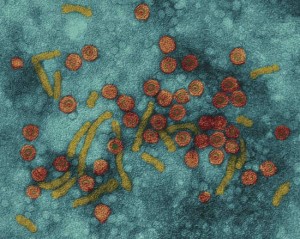
Hepatitis B Virus
Hepatitis B infects from an infected person by
Hepatitis B can be transmitted from mother to child during birth. Children infected at birth often become life-long carriers of the hepatitis B virus, and can infect others. In some countries of Africa, Asia and South America up to 30% of the population may be carriers of the virus.
In rare cases hepatitis B can be transmitted between small children, probably through minute amounts of blood from loose teeth in the saliva.
People potentially exposed to hepatitis B should be vaccinated. These include:
The vaccine contains recombinant hepatitis B surface antigen.
The vaccine protects for 25 years after 3 vaccinations, perhaps even life long.
The first two injections, about 4 weeks apart, protect for up to 6 months and a third vaccination after six months gives protection for up to 25 years.
The vaccine can be combined with vaccine against hepatitis A.
Tiredness, nausea, loss of appetite, jaundice and sometimes fever.Hepatitis B has a mortality of about 2% in the acute phase and the same number develop what is called a chronic active hepatitis B, which eventually leads to hepatic failure.
Antibodies and nucleic acid in a blood sample.
Supportive only. No specific antiviral drugs available. Severeal experimental treatments have been tried against the chronic active hepatitis with interferon being the most promising so far.Prevention
Vaccination. Avoid unsafe sex. People living overseas and long-term travellers should give priority to hepatitis B vaccination.
Vaccination against hepatitis B is included in the childhood vaccination programme of most countries.