
Korea is considered the most prepared country to build Brazil’s first high-speed railway, according to a report by a Brazilian daily.
The report says Brazil’s President-elect Dilma Rousseff met with Korea’s Minister of Land, Transport and Maritime Affairs Chung Jong-hwan during the G20 Seoul Summit and said only Korea has a consortium that is ready to participate in the bidding slated for next month.
The US$19 billion project will connect Rio de Janeiro, Sao Paulo and Campinas with a single railway some 500-km long. It is expected to be completed by 2016, before the start of the Summer Olympics in Rio de Janeiro.
Arirang News
about Brazil, Paraíba and João Pessoa
Rousseff and Lula in the middle of the transition, together at the Planalto presidential palace. Foto: Roberto Stuckert
In a move seen as a sign that gender will be important in her government, Brazil‘s president-elect Dilma Rousseff is preparing a Cabinet that is one-third women.
Rousseff, who on Jan. 1 will become the first woman president of this Latin American powerhouse, announced to the team making the transition from the Luiz Inácio Lula da Silva administration that she plans to boost the female presence in government ministries.
The president-elect served as a government minister herself and has been among Lula’s leading collaborators in his eight years in the presidency. Both belong to the Workers Party (Partido dos Trabalhadores, PT).
“It would be a very important gesture that the first-ever woman president concerns herself with women’s matters,” Teresa Sacchet, of the public policy research centre at the University of São Paulo, told IPS.
“I have hopes that the government will make a leap in regards to gender, that it will show more concern about gender inequality and others, like social inequality,” she added.
Of Lula’s 24 ministers, just three are women, although his two terms in office are seen as having advanced laws and policies that promote gender equality.
However, women were the stars of the October elections, and not just because they make up 51.7 percent of the electorate. In the first round of presidential voting, on Oct. 3, two women candidates came in first and third place: Rousseff with 47 percent of the votes, and Marina Silva, of the Green Party, with nearly 20 percent.
That is why Sacchet, who holds a doctorate in political science from Britain’s University of Essex, believes that if one-third of Rousseff’s ministers are women, “it would have great symbolic importance” because, among other things, it will encourage more women to participate in politics. (more…)
about Brazil, Paraíba and João Pessoa
Brazil is drafting a media bill that is geared to stimulate the participation of common citizens in the communications industry and preventing market rules from governing such a sensitive area, announced Social Communications minister Franklin Martins.
“For 200 years public opinion has been passive, was considered a simple consumer, but the new bill will stimulate citizens’ participation so it ceases to be passive”, said Martins.
Outgoing president Lula da Silva requested Martins to draft a “regulatory framework” for the media system which is to be delivered to president-elect Dilma Rousseff who takes office next January first.
“If there’s no regulation, only the market governs, which means the law of the richest and most powerful”, said Franklin Martins.
The Lula da Silva administration proposal includes an article on contents which impedes the apologia of racism and racial or sexual discrimination, as well as stimulating ‘national culture’ and ‘respect for the Portuguese language’.
Before sending the bill to Congress the future government will call “for a wide open debate from different sectors and will be consulting with public opinion” said Martins who recently toured several European countries to find out about legislation on public broadcasting and television networks. (more…)
about Brazil, Paraíba and João Pessoa
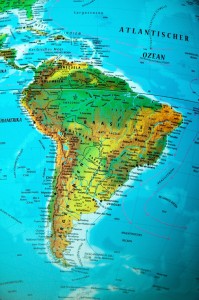
South America - low cost yet high quality living
By Susan Beverley published in Escape From America Magazine
South America is such an exceptionally vibrant continent, inhabited by passionate people who live life to the full. As Lonely Planet puts it: “It’s as though the continent was built for travel.” If you’re currently exploring your global options in search of the best place to retire, and you’re looking for a place where you can have a low cost yet high quality living, South America is home to a handful of nations that you might like to closely consider.
In recent years many South American countries have experienced significant and sustained economic growth, which has seen at least the quality of infrastructure improve, if not the quality of life for many citizens. However, there remains a significant gap between rich and poor across the continent, and inflation can still be a serious issue which means that you have to plan your retirement to South America carefully, and do detailed research into which nation you could most comfortably call home.
The potential downsides of committing yourself to South America for the rest of your life are relatively few however, as long as you learn the main language of your chosen destination, (probably Spanish or possibly Portuguese), you manage your money matters carefully, and you select a town or location where there is the right balance between cultural integrity and relative sophistication.
For retirees it is critical that you explore your healthcare options before you commit to relocation too – and so this will include you looking at where you will be able to access any support or services you could conceivably need in the future. Additionally you need to look at affording ongoing healthcare insurance or services. Some expats go uninsured – paying as they go for any treatment or care. Others commit to an international policy which can be expensive, but invaluable if you do decide to live off the beaten track and therefore you put yourself in the position where you may need medical evacuation one day in order to access treatment for example.
The decision you will make will be determined by the nation you choose, the location within that nation that you decide to call home, the facilities available and your own budget. However, please do bear in mind this one consideration when exploring South America for a place to call home in retirement.
The other critical issue you will need to think about as you travel or research is whether you should be looking to live in a country and a location where other expatriates have already set up home, or whether you want to be a pioneer! Each alternative has its benefits…for example, if you live in an expat enclave you will be able to make friends fast and benefit from others’ experiences of setting up a new life in a new country. However, if you decide to fully integrate with the local people you will certainly be embracing the local culture, and if this is why you’re retiring abroad, it may be the level of experience you’re seeking.
Having covered the basics for you to keep in mind when examining where in South America you would like to retire, it’s time to look at what are perhaps the five best places to retire in South America.
Brazil is the largest country in South America, and it’s Portuguese speaking – which is perhaps the only main downside of this nation! Many people state categorically that Portuguese is harder to learn than Spanish – however, the good news is that many of the most popular destinations with expatriate retirees are the more touristy resorts on the country’s North Eastern coast where many people can speak some English. What’s more, there are plenty of people who happily live in Brazil and only pick up rudimentary language skills.
Naturally enough, if you want to get the most out of this incredible and vast country with its rainforests and mountains, its plains and highlands, amazingly exciting cities and beautiful resorts then you will need to embrace the language – and you will really need to speak a decent level of Portuguese if you decide you want to move away from the popular resorts such as Natal or even Rio.
Geographically speaking Brazil is exceptionally diverse, and this has a direct effect on the country’s climate. Most of the country is tropical – with many tourists and expatriates preferring the North East for its consistently beautiful weather. Although, if you’re seeking a more temperate balance then head much further south where you will come across marked seasonal changes and even experience frosts and occasional snowfall in the winter.
In terms of where exactly to live in Brazil the choice is vast! You have the international appeal and cultural accessibility of aforementioned Natal – although there are those who say the resort has been spoiled by over-development. You have the vibrancy of life in Rio – but then you have high crime rates and a distinct divide between very rich and very poor that’s evident in the city.
João Pessoa is perhaps a good alternative for those seeking a balance between sophisticated city living, tropical beach access, historical and modern architecture, culture and entertainment, a relaxed pace of life and an affordable cost of living. Or what about Búzios, Valença or Paraty to name but three alternatives?
In truth, the only way an expatriate will find the right home in Brazil is to travel to and then across this stunning country. Whilst swathes of the nation are considered inaccessible or inhospitable because of the terrain for example, it is also a nation with so many choices of wonderful cities, towns, villages and communities to call home. (more…)
about Brazil, Paraíba and João Pessoa
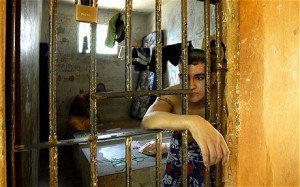
Prison riots are frequent in Brazil, where overcrowding of cells is common and gangs often run their wings Photo: ALAMY
Eighteen inmates were killed and a prison guard shot and wounded during a prison riot in northeastern Brazil that ended on Tuesday, officials said.
The riot began on Monday in the Pedrinhas penitentiary complex in Maranhao state when prisoners overpowered and shot the guard during an inspection, and took him and another five guards hostage to demand better conditions.
Nine of the prisoners were murdered in score-settling by other convicts on Monday, and the other nine on Tuesday, the state secretary for security, Aluisio Guimarares, told AFP.
Media reports said several of the inmates killed were serving time for rape. Some were reportedly decapitated.
Mr Guimarares lamented the “useless killings”.
He added that police “have retaken control of the prison and calm has returned”.
He said the wounded guard was released by the prisoners on Monday and was in a stable condition in hospital, and the other five guards were freed unharmed on Tuesday.
Prison riots are frequent in Brazil, where overcrowding of cells is common and gangs often run their wings.
Mr Guimeraes said this latest riot occurred in a high-security wing of the penitentiary which held 320 prisoners. The whole complex has an inmate population of 4,000 – twice its official capacity.
about Brazil, Paraíba and João Pessoa